
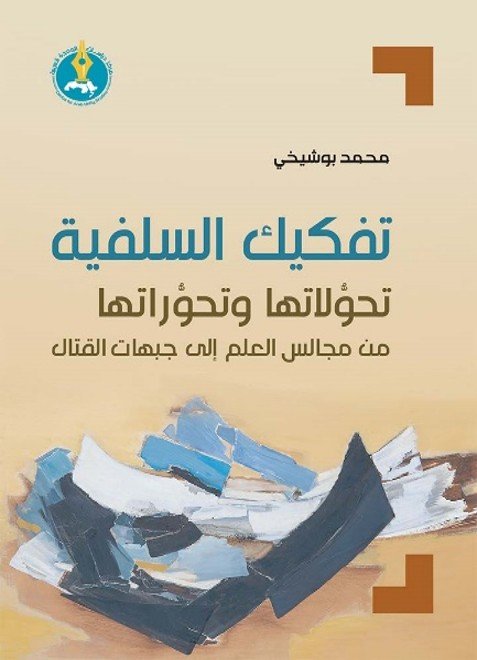
Deconstructing Salafism It's Transformations and Modifications from Scholarly Assemblies to Battlefields A Review of Mohamed Bouchikhi’s Book
Article Sidebar
Main Article Content
Abstract
This book by Moroccan researcher Mohamed Bouchikhi examines the historical and intellectual evolution of Salafism, arguing that its development is inseparable from political authority and the interaction between religion and politics. Across six chapters, the author traces key transformations, from conflicts between hadith scholars and jurists to the Indian hadith revival and its alliance with Najdi-Wahhabi doctrine. He then explores the emergence of “revivalist hadithism,” represented by al-Albani, and its convergence with Sayyid Qutb’s revolutionary thought, which contributed to the formation of “Jihadi Salafism.” Finally, the book examines digital jihadism and “lone wolves” as signs of a rupture with traditional religious authority. This development reduces Islamic knowledge to individual ijtihad and weakens the ethical and jurisprudential constraints traditionally governing violence.
Article Details

This work is licensed under a Creative Commons Attribution-NonCommercial 4.0 International License.

© Authors retain full copyright of their published works. Articles published in the Journal are distributed under the Creative Commons Attribution–NonCommercial 4.0 International License (CC BY-NC 4.0). This license permits others to download, read, share, reproduce, and adapt the work for non-commercial purposes, provided that appropriate credit is given to the original author(s), a link to the license is provided, and any modifications are clearly indicated. Commercial use of the work is not permitted without prior authorization from the copyright holder(s).